
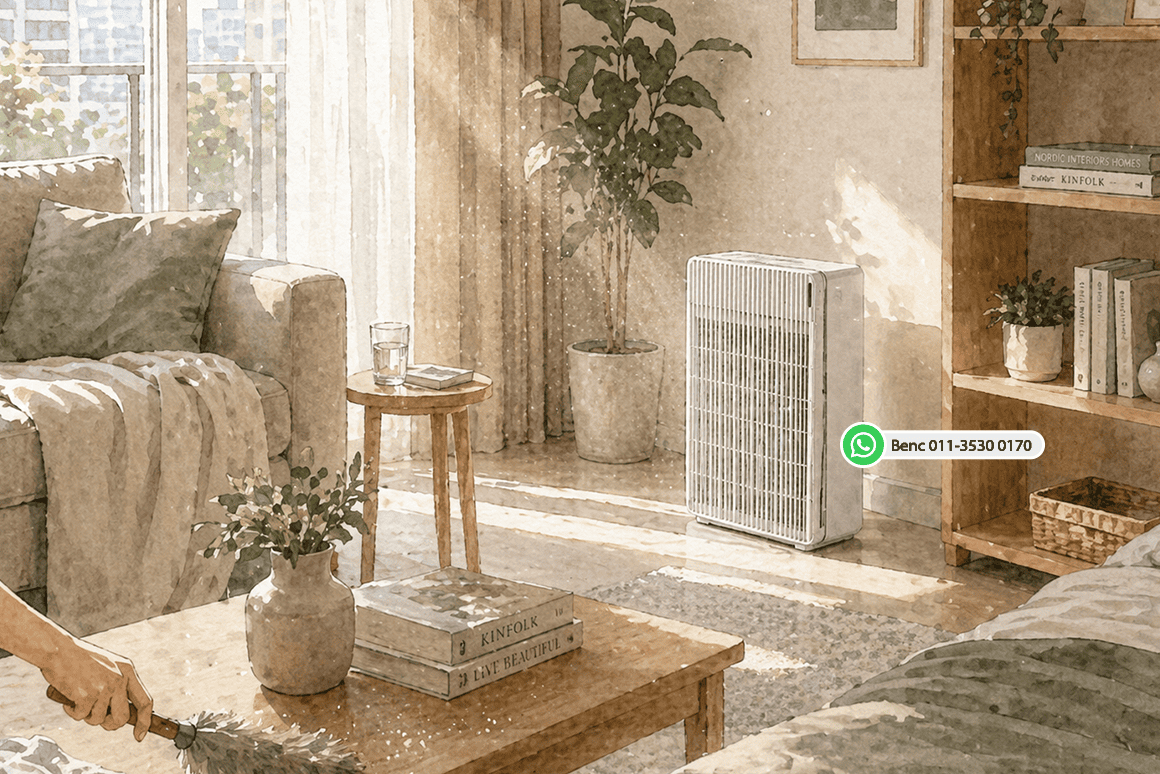
An air purifier may help reduce airborne dust particles when the model fits the room size and is used consistently. It does not replace cleaning, but it can support cleaner indoor air for rooms where dust builds up quickly or keeps returning.
Why dust becomes a common indoor problem
Dust can come from outdoor air, clothing, fabric, carpets, renovation work, nearby roads, pets, and daily movement inside the home or office. In Malaysia, enclosed air-conditioned rooms can make dust feel more noticeable because air often circulates in the same space for long hours.
This is why people often start searching for an air purifier in Malaysia when bedrooms, condo living rooms, offices, or clinics feel dusty even after cleaning.
Can an air purifier remove dust completely?
No air purifier should be treated as a complete replacement for cleaning. Larger dust that settles on shelves, floors, fans, and furniture still needs regular cleaning. The main role of an air purifier is to help filter airborne particles while the unit is running.
For best results, users usually combine regular cleaning, better room habits, and a suitable air purifier model based on coverage and daily usage.
Where dust concerns usually happen
Bedrooms
Dust can feel more noticeable in bedrooms because bedding, curtains, clothing, and closed windows all affect daily indoor comfort.
Condo and apartment units
Compact layouts may make dust feel like it returns quickly, especially when the living room and bedroom are used often.
Offices and clinics
Shared spaces can collect dust from people movement, paper, furniture, air-conditioning, and longer operating hours.
What should you check before choosing?
The most important details are room size, dust source, daily usage, and whether the air purifier is for home or business use. A bedroom may need a different model direction from a clinic, showroom, office, or larger living room.
If you are comparing models, start with the CUCKOO air purifier models Malaysia page. If you are choosing for a home, the home air purifier Malaysia page gives a more practical route.
Dust, haze, and PM2.5 are not always the same
Dust is a broad everyday concern, while PM2.5 refers to very fine particles that are often discussed during haze or air quality alerts. If your concern is haze or fine particle pollution, read the PM2.5 Malaysia guide as a next step.
If your concern is mainly visible dust, room cleanliness, or dusty-feeling indoor air, this page is the better starting point.
Which model direction usually makes sense?
For bedrooms and personal rooms, users often compare compact and quieter model options first. For larger living rooms, offices, clinics, or commercial areas, wider coverage may matter more. The best choice should match the space, not just the dust concern.
For a broader buying path, the best air purifier Malaysia guide can help you compare use cases before looking at pricing.
Common questions about air purifiers and dust
Will an air purifier stop dust from coming back?
No. Dust can still enter or collect in the room. An air purifier may help with airborne particles, but cleaning and better room habits are still needed.
Is an air purifier useful for a dusty bedroom?
It can be useful if the model suits the bedroom size and is used consistently, especially where dust, fabric, curtains, or closed-room routines make air feel less fresh.
Should condo users consider an air purifier for dust?
Yes, especially when dust feels noticeable in bedrooms or living rooms. Condo users should compare room size and layout before choosing a model.
Is dust different from haze?
Yes. Dust is a common indoor concern, while haze is more connected to outdoor air quality and fine particles such as PM2.5.
What should I share before asking for advice?
Share your room size, property type, dust concern, location, and whether the space is for home, office, clinic, showroom, or commercial use.